

A Historic Night for American Hockey
The United States captured its first Olympic men’s ice hockey gold medal in 46 years on Sunday night, ending a drought that stretched across generations. In a dramatic final in Milan, the Americans defeated their opponent 2–1 in overtime, sealing a victory that instantly became one of the defining moments in modern U.S. hockey history.
When the puck crossed the line at 1:41 of overtime, the bench erupted. Players threw their gloves in the air. Coaches embraced. The crowd roared as the red, white and blue reclaimed the top of the Olympic podium. It was not just a win — it was redemption decades in the making.
The Goal That Broke the Wait
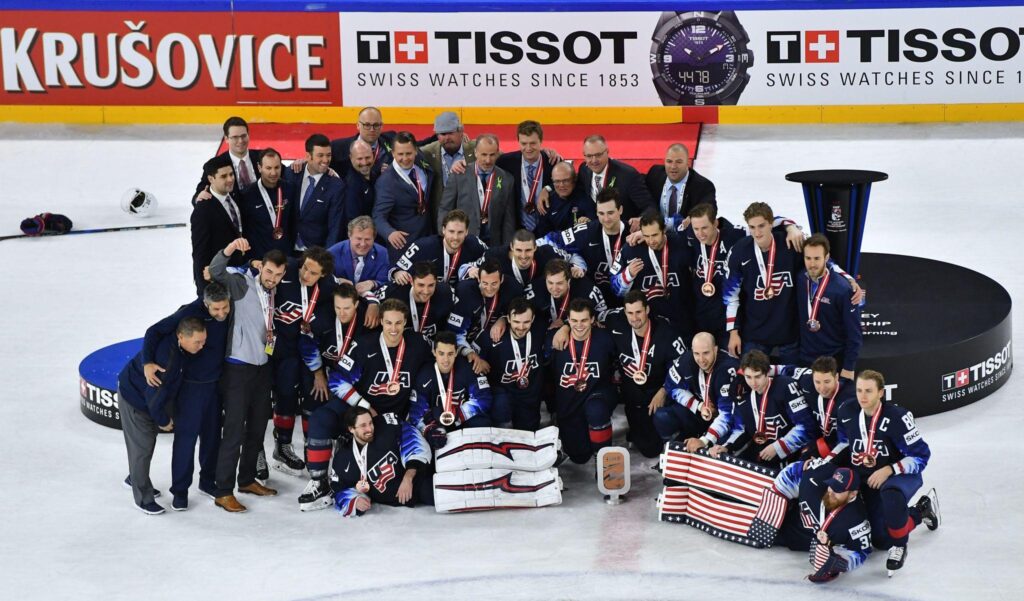
The hero of the night was center Jack Hughes, who finished a fast-moving sequence in overtime with calm precision. The goal was sudden, clean and decisive — the kind that silences one side of the arena while sending the other into chaos.
For Hughes, it was a career-defining moment. For the team, it was the release of 46 years of expectation. But even as teammates piled on in celebration, something deeper was unfolding.
The Absence That Defined the Victory

Left wing Johnny Gaudreau, one of American hockey’s brightest stars, was not there to see it.
Gaudreau died in August 2024 at the age of 31 after being struck by a drunk driver while cycling in New Jersey. His passing stunned the hockey world. A former world junior gold medalist and world championship bronze medalist, he had long been considered one of the most creative and electrifying American forwards of his generation.
Throughout the Olympic tournament, his memory remained close to the team.
A Jersey Raised in Tribute
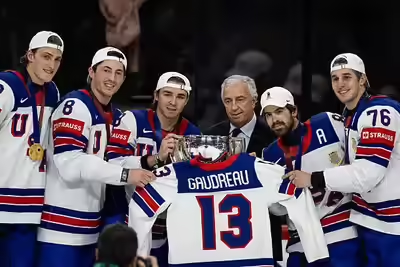
As the Americans celebrated their overtime victory, several players carried Gaudreau’s jersey onto the ice. They held it up for the crowd and for the cameras — a quiet but powerful gesture.
In that moment, the gold medal felt bigger than sport. The tribute was not loud or theatrical. It was simple and sincere. It reflected how deeply Gaudreau’s presence had shaped the team, even in his absence.
The image of the jersey raised amid falling confetti may become one of the defining visuals of these Winter Games.
A Family at the Center of the Celebration
After the medal ceremony, members of the team invited Gaudreau’s children onto the ice to join the celebration. Players knelt down, gold medals hanging from their necks, and shared the moment with the young family members of their late teammate.
Meredith Gaudreau, Johnny’s widow, was in attendance throughout the Olympics. On Sunday, she watched from the stands alongside Johnny’s parents.
For them, the evening was layered with pride and heartbreak. But the team’s gesture ensured that Johnny’s legacy was not just remembered — it was honored publicly and respectfully.
For the first time in 46 years, the U.S. Olympic Men's Ice Hockey Team is ✨golden✨ again 🇺🇸
— USA Hockey (@usahockey) February 22, 2026
Jack Hughes' OT winner lifts the U.S. past Canada to bring home the gold 🏅
Golden recap: https://t.co/OG6EMxSaEn pic.twitter.com/0D0aG9FxMN
A Career That Left a Mark
In the NHL, Gaudreau played nine seasons with the Calgary Flames and two with the Columbus Blue Jackets. He scored 243 goals and recorded 500 assists, earning All-Star honors in 2022.
Yet statistics tell only part of the story.
At 5-foot-9, Gaudreau built his reputation on skill, vision and fearlessness. He could weave through defenders, slow the game down and create opportunities where none seemed possible. Teammates often spoke of the energy shift that occurred whenever he touched the puck.
More Than a Gold Medal
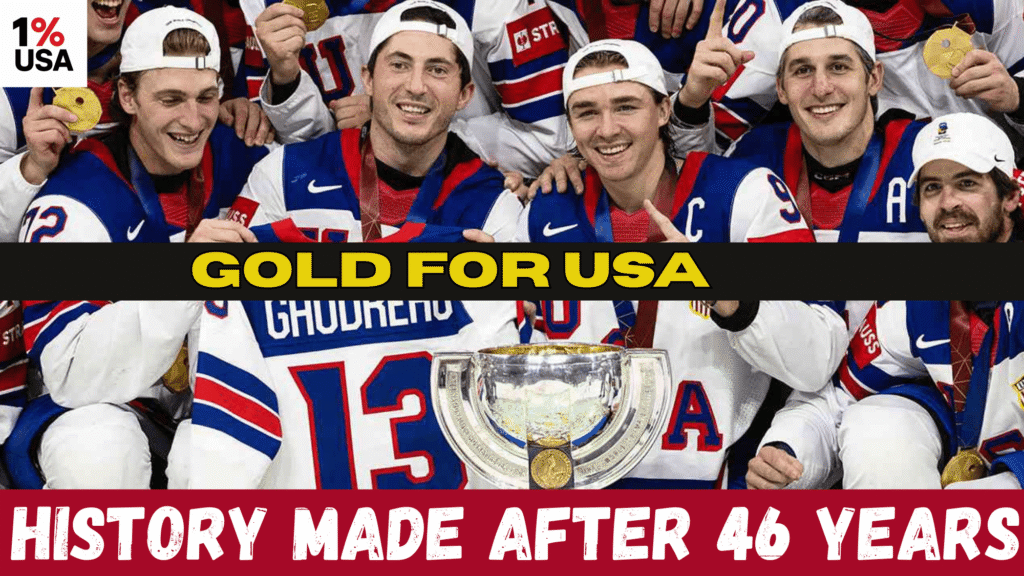
The United States’ return to Olympic gold will reshape expectations for the program. Breaking a 46-year drought is not just symbolic — it signals a new era for American men’s hockey.
But this championship will be remembered for more than the overtime goal.
It will be remembered for a jersey held high.
It will be remembered for children standing on the ice.
It will be remembered as a night when victory and memory stood side by side.
In the end, the gold medal represented achievement. The tribute represented something even greater — a reminder that while players may leave the rink too soon, their impact endures.