
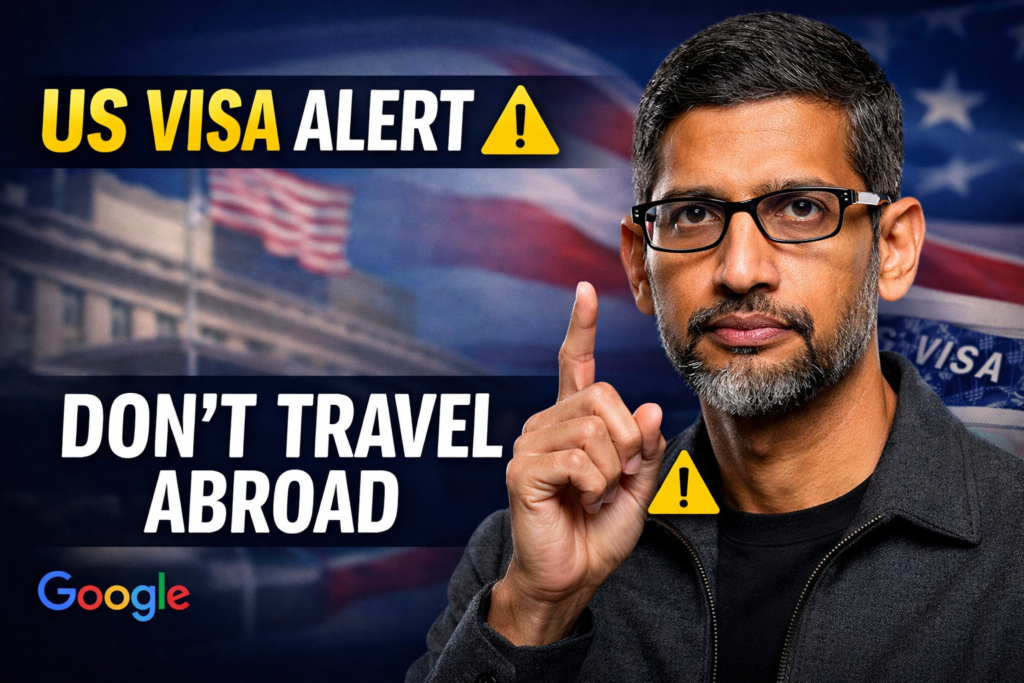
Global technology companies are warning their workers to be careful. This time, the concern is not about jobs or markets. It is about travel. Google and Apple have advised some employees on U.S. work visas to avoid international travel. The reason is simple. U.S. embassies are facing long delays for visa stamping. In some cases, the wait can stretch up to one full year. Because of this, employees risk getting stuck outside the United States if they travel abroad.
The warning came to light after a report by Business Insider, which cited internal company memos. The story was later reported by Reuters. Together, the reports show growing concern inside the tech industry about visa processing problems.
Why Google and Apple Issued the Warning
Google and Apple employ thousands of skilled workers on U.S. visas. Many of these employees are from countries like India and China. They often need visa stamping at U.S. embassies when they travel abroad. However, embassy appointment slots have become very hard to get. In some locations, the wait time is close to twelve months. Because of this delay, companies fear their staff may not be able to return on time.
Google’s internal memo explained the issue clearly. It said that several U.S. embassies and consulates are dealing with heavy backlogs. As a result, even routine visa stamping now takes much longer than before. Apple shared similar guidance with its staff, according to the report. Both companies want to avoid situations where employees are forced to stay outside the U.S. for months.
Alphabet's Google has advised some employees on U.S. visas to avoid international travel due to delays at embassies.https://t.co/moGxCqkEB6 pic.twitter.com/Z4bYzebnJh
— NEWSMAX (@NEWSMAX) December 20, 2025
Role of New Social Media Screening
The delays did not appear suddenly. Immigration law firms say new screening rules are a major reason. The U.S. government has started deeper checks of visa applicants’ social media activity. This applies to many visa categories. These include H-1B workers, their dependents on H-4 visas, and students on F, J, and M visas.
Because of these checks, embassies now need more time to process each case. As a result, appointment backlogs have grown. Immigration lawyers working with Google and Apple warned employees that these delays are real. They also said the risk of being stranded abroad has increased. Therefore, companies felt it was safer to advise staff to stay within the U.S.
Which Visa Holders Are Affected
The advisory mainly applies to employees on temporary visas. Google’s memo mentioned H-1B, H-4, F, J, and M visas. These categories cover skilled workers, their families, students, and exchange visitors. Many people in the U.S. tech sector fall under these groups.
If such employees leave the U.S., they usually need a visa stamp to re-enter. However, due to the long wait times, getting that stamp has become uncertain. Because of this, even a short family visit abroad could turn into a long and unplanned stay outside the country.
Trump Administration’s Visa Policy Impact
The issue has also drawn attention because of recent policy changes. Earlier this month, the administration of President Donald Trump announced stricter vetting for H-1B visa applicants. This includes detailed screening of online presence. The goal, according to officials, is to reduce misuse of the visa system.
At the same time, the government imposed a very high fee on new H-1B applications. This move has caused concern across the tech industry. Companies say the H-1B program is essential for hiring skilled workers. Critics argue the changes make the process slower and more expensive. Because of this, visa delays have become a serious operational problem.
Also Read — https://1percentusatrends.com/epstein-files-trigger-fresh-scrutiny-few-new-answers/
Earlier Warnings and Official Response

This is not the first time such warnings were issued. In September, Google’s parent company Alphabet had already advised H-1B holders to avoid international travel. That email urged employees to remain in the U.S. unless travel was absolutely necessary. The latest advisory shows that the problem has not improved.
The U.S. Department of State has acknowledged the delays. Officials said embassies are conducting online presence reviews for applicants. They also noted that expedited processing may be requested in special cases. However, such approvals depend on individual situations. This means uncertainty remains for many workers.
Finally You Touch Last moment Thanks
The message from Google and Apple is clear. International travel has become risky for U.S. visa holders. Long embassy delays and stricter checks have changed how companies advise their staff. For now, staying within the United States seems to be the safest option. Until processing times improve, many skilled workers may have to put personal travel plans on hold. The situation highlights how visa policy changes can affect real lives, even inside the world’s biggest technology firms.