
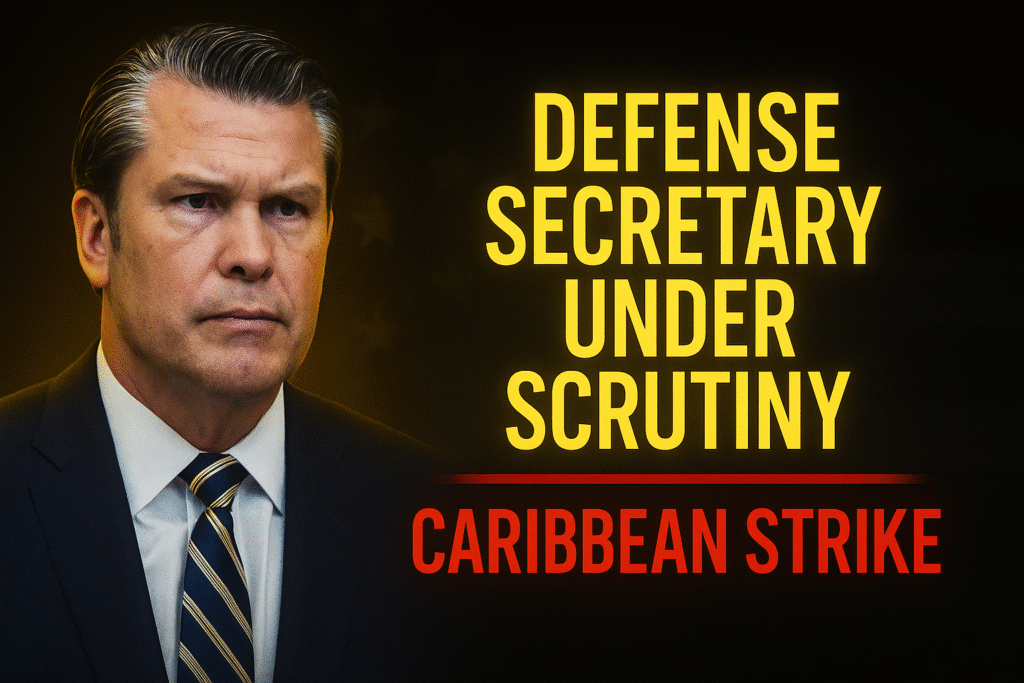
Defense Secretary Pete Hegseth is now under intense scrutiny as lawmakers and the public demand answers about a controversial U.S. military strike in the Caribbean. The strike, often described as a “double-tap” attack, targeted an alleged drug-smuggling boat in September. However, instead of ending the issue, it has opened a new debate about transparency, accountability, and the rules used during such missions.
What Happened During the Caribbean Strike
According to early reports, U.S. military forces tracked a small vessel suspected of carrying illegal drugs across Caribbean waters. Officials say the team fired once to disable the boat and fired again moments later to destroy it completely — a method some critics label as “double-tap.”
Although this tactic aims to prevent suspects from regrouping or escaping, it also raises serious concerns about potential misuse and risk to human life. Because of this, many lawmakers now want to know exactly what Secretary Hegseth knew, when he knew it, and how much direct oversight he had.
One of our citizens said this :
PREMEDITATED MURDER!!! @realDonaldTrump This is on YOU! @NobelPrize
— Annie van Leur (@AnnevanLeur) November 28, 2025
Hegseth orders to kill everybody in Caribbean boat strike. As two men clung to a stricken, burning ship, Joint Special Operations commander followed Hegseth's order to leave no survivors. pic.twitter.com/vBEdULYG6F
Lawmakers Press for Clear Answers in this strike
As more details surface, members of Congress are asking tough questions. They want a full timeline of events, including the intelligence that led to the strike and whether the Defense Secretary approved or reviewed any part of the operation.
Additionally, lawmakers argue that the American people deserve to understand why such extreme force was used, especially when the situation involved a small boat rather than a large organized threat. They also want clarity on whether the mission followed standard military rules and international law.
Public Concern Continues to Rise
While Congress pushes for documents and briefings, the public is also paying close attention. Many citizens believe national security is important, but they also expect responsible military decisions. Therefore, people are asking whether the strike was necessary and whether it followed ethical guidelines.
Community leaders in Caribbean nations have also expressed worry. They say the region already faces tension with drug-smuggling networks, and any military action — especially one seen as excessive — can create fear among local fishermen and coastal residents.
PROTEST OUTSIDE U.S. EMBASSY IN PORT OF SPAIN, TRINIDAD AND TOBAGO🇹🇹
— Kawsachun News (@KawsachunNews) October 17, 2025
The Assembly of Caribbean People denounces extrajudicial killings at sea and rejects the United States’ use of Caribbean countries as a military staging ground to attack Venezuela pic.twitter.com/MTxqt9oaNl
Hegseth’s Response to the Growing Pressure
So far, Defense Secretary Pete Hegseth has defended the military’s actions. He stated that the mission focused on stopping illegal drug operations, Immigrations that harm both the United States and neighboring countries. He also promised full cooperation with ongoing inquiries.
However, critics argue that his statements are not enough. They believe more transparency is needed, especially regarding the second strike that destroyed the boat. Some military experts say “double-tap” tactics should be used only in high-risk situations, and they question whether this case met that standard.
Military Officials Try to Clarify the Situation
Meanwhile, Pentagon officials are working to provide more information. They claim the vessel did not respond to repeated warnings and showed signs of armed resistance. Therefore, according to them, the second strike aimed to “neutralize all threats on the scene.”
But opponents say this explanation leaves too many unanswered questions. They want to know whether anyone on board survived, whether proper identification was made, and whether non-lethal options were considered.
In the end, the controversy shows how essential transparency is in national-security decisions. While the fight against drug trafficking remains important, many Americans believe military actions should always reflect responsibility, accuracy, and respect for human life. As inquiries continue, the country waits for clear answers — and possibly, major policy changes.